

By Stefanie Eschenbacher
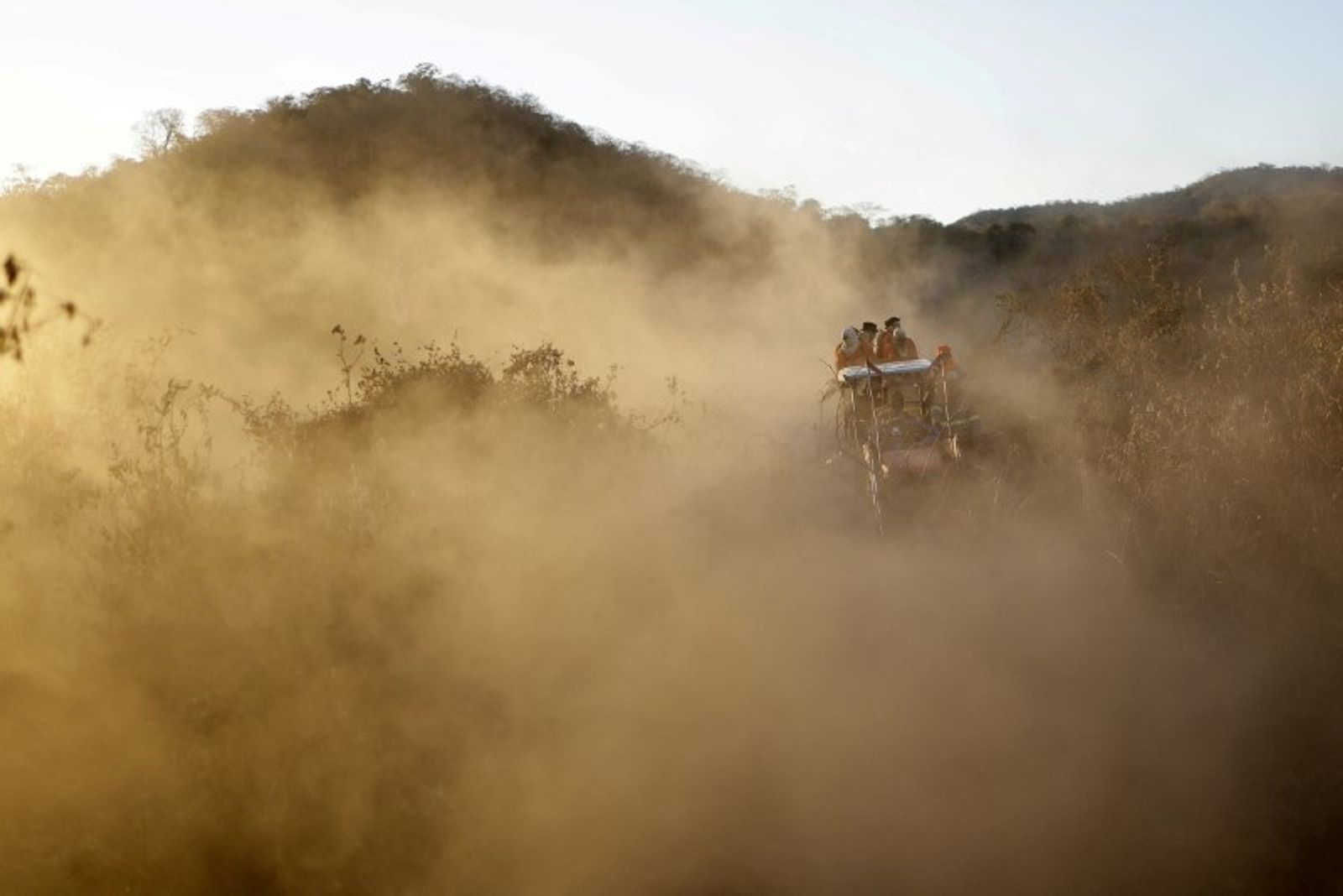
SAO PAULO (Reuters) – Climate change intensified by 40% the weather feeding devastating wildfires that have likely killed millions of animals this year in Brazil’s Pantanal, the world’s largest wetlands, scientists said in a study published on Thursday.
Climate change also made the hot, dry and windy conditions this year four to five times more likely, according to the study by World Weather Attribution, a global team of scientists that examines the role played by climate change in extreme weather.
The Pantanal’s normally abundant waters and location – between the Amazon rainforest, Brazil’s vast savanna and Paraguay’s dry forests – make it a magnet for rare animals and tourists seeking them out.
Usually, the wildfires in the Pantanal pick up in July, and peak between August and September. But the fires surged unusually early this year, beginning in late May, and at a pace that threatens to exceed the 2020 record, scientists said.
“This year’s Pantanal wildfires have the potential to become the worst ever. Even hotter conditions are expected over this month and the months ahead,” said Filippe Santos, one of the authors of the study and a researcher at Portugal’s University of Evora and Federal University of Rio de Janeiro (UFRJ).
In 2020, a third of the wetlands burned and killed 17 million vertebrates.
Before the phenomenon of climate change, similar early fire weather conditions were extremely rare. Now, they are expected every 35 years, scientists said.
UFRJ data indicates that fires are once again rapidly expanding in the Pantanal. It showed on Thursday that nearly 10% of the Pantanal – an area larger than the U.S. state of Connecticut – has burned so far this year, the most ever recorded for the period.
The wetland in central-western Brazil is home to thousands of animal and plant species, such as jaguars, giant river otters, maned wolves, howler monkeys and marsh deer.
Over time, as climate warms further, the Pantanal is forecast to become even hotter and drier.
The scientists said that while climate change makes the fires worse, humans often set off the spark. Farmers clearing land can set fire or leave behind downed vegetation that easily catches fire.
(Reporting by Stefanie Eschenbacher; Editing by Jake Spring and Emelia Sithole-Matarise)